
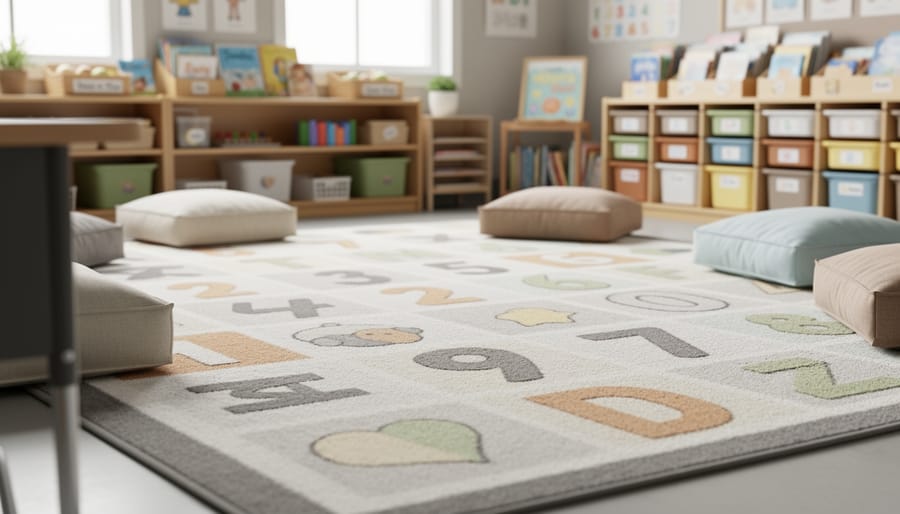
A quality classroom rug creates an inviting learning space where students gather for lessons, collaborate on projects, and build community together. For educators shopping in 2026, the right rug balances durability for heavy foot traffic, stain resistance for inevitable spills, and comfort for students sitting during circle time. Most teachers find success with nylon or polypropylene rugs in the $100 to $400 range, depending on classroom size and features needed.
The challenge many educators face goes beyond simply choosing colors or patterns. Budget constraints mean making a decision that will serve students for years, not months. Many schools operate with limited funding for classroom materials, and teachers often supplement supplies from their own pockets. This reality makes the rug purchase even more critical. You need something that withstands daily use, cleans easily when accidents happen, and maintains its appearance through countless read-alouds, morning meetings, and group activities.
At the same time, community organizations and local charities recognize how essential these classroom elements are for creating welcoming learning environments. When schools lack resources, supportive neighbors step in to help furnish classrooms and ensure every child has access to spaces where they can thrive. The right classroom rug isn’t just about aesthetics. It defines a space where students feel safe to take risks, ask questions, and grow together. Whether you’re setting up a new classroom or replacing a worn-out gathering spot, understanding what makes a rug classroom-ready will help you invest wisely and create the learning environment your students deserve.
Why the Right Classroom Rug Matters
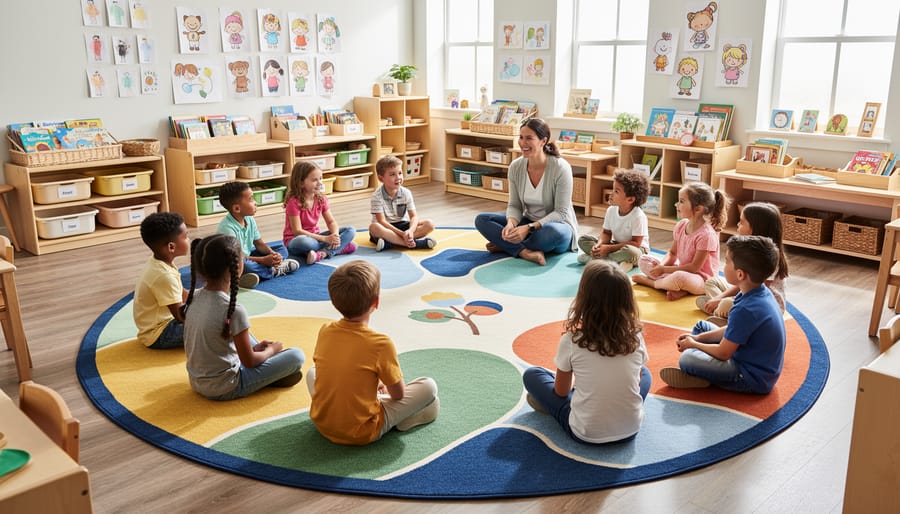
A quality classroom rug does much more than cover bare floors. It transforms a teaching space into a welcoming environment where children feel comfortable gathering for story time, group discussions, and collaborative learning. When students sit together on a soft rug, they’re more likely to engage, listen, and participate, especially younger children who benefit from physical closeness during instruction.
Classroom rugs also serve practical purposes that directly support learning. They reduce noise levels by absorbing sound, which helps children concentrate and makes it easier for everyone to hear during lessons. A well-placed rug defines specific areas within the classroom, creating visual boundaries for reading corners, math centers, or calm-down spaces that help students understand classroom routines and transitions.
For children facing challenges at home, including those from families experiencing furniture poverty or housing transitions, the classroom may be the most stable, comfortable environment they encounter each day. A clean, inviting rug signals that this space is cared for and that they matter. Organizations like Helping With Furniture recognize this connection between quality learning environments and children’s well-being, which is why supporting schools and families with essential furnishings remains central to building stronger communities.
What to Look for When Choosing a Teacher Classroom Rug
Size and Shape for Your Space
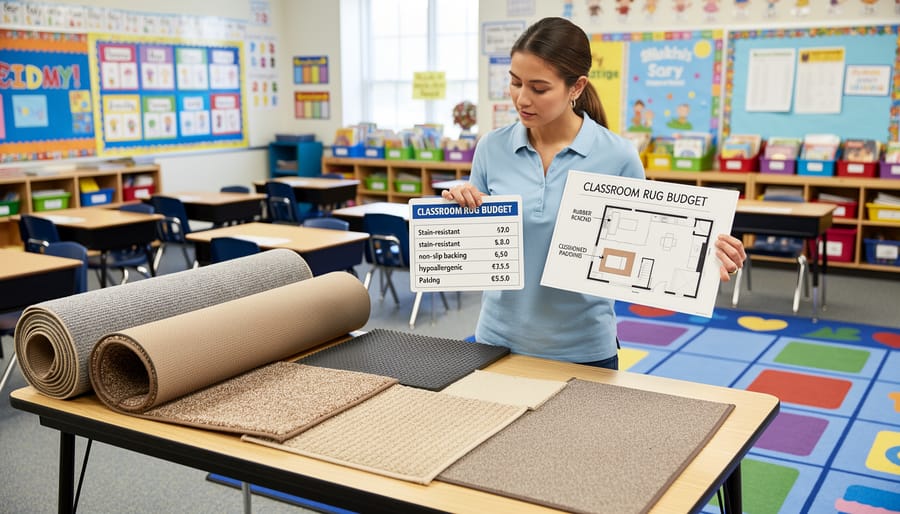
Measure your classroom gathering area before shopping. A rug that’s too small leaves children crowded and bumping elbows, while an oversized rug wastes precious floor space you might need for desks or storage.
For preschool and kindergarten circle times, aim for a rug around 6×9 feet or 8×10 feet to comfortably seat 15-20 children. Elementary classrooms with larger groups often need 8×11 or 9×12 feet rugs. If you’re creating a reading corner rather than a whole-class gathering space, a 5×7 foot rug usually works well.
Shape matters more than you might think. Rectangular rugs fit most classrooms efficiently and work for both circle time and activity centers. Round or oval rugs naturally encourage circle formations and equal participation, no “front” or “back” of the group, making them ideal for discussions and storytelling. Square rugs split the difference, fitting nicely in corner spaces while still supporting circular seating.
Walk your space and use masking tape to outline potential rug sizes on the floor. Sit in different spots around your marked area. Can you reach materials easily? Does it leave walkways clear? This simple test prevents costly sizing mistakes.
Material and Durability
The material you choose determines how well your classroom rug will stand up to years of active learning. In high-traffic classrooms where budgets are tight, this decision truly matters.
Nylon rugs offer exceptional durability and resist crushing, making them ideal for areas where children gather daily. They hold up beautifully to heavy foot traffic and maintain their appearance longer than most alternatives. The main trade-off is cost, though their longevity often justifies the initial investment.
Polyester provides a softer feel at a lower price point. While not quite as durable as nylon, good-quality polyester rugs resist stains well and work perfectly for classrooms with moderate use. They’re excellent middle-ground options when you need to balance comfort and budget.
Polypropylene rugs are budget-friendly champions. They resist moisture and stains remarkably well, clean up easily, and cost less upfront. However, they may show wear faster in heavily used gathering areas and can feel less plush underfoot.
Natural fiber rugs like wool offer warmth and durability but require more careful maintenance and come with higher price tags. They’re less common in classrooms because spills are harder to clean and moisture can cause problems.
For schools working with limited funds, a quality polypropylene or polyester rug often delivers the best value, providing years of service without breaking the budget.
Safety Features
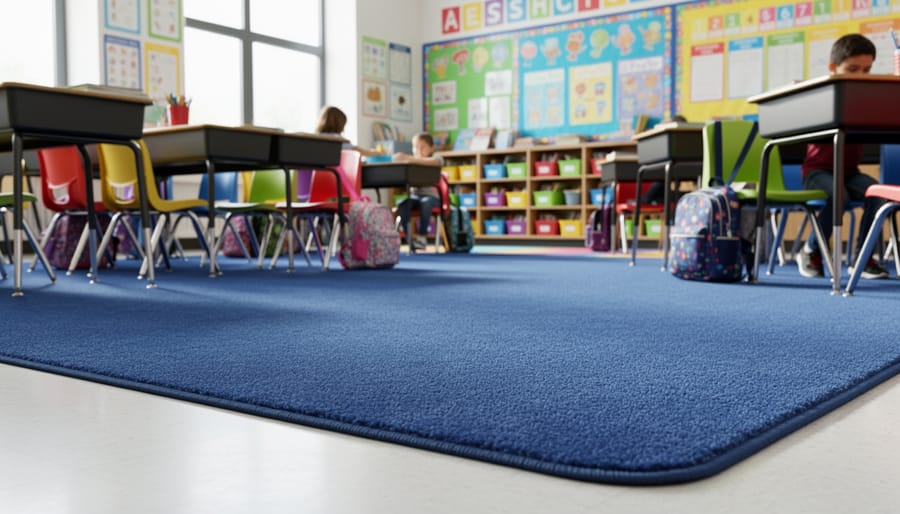
A classroom rug’s safety features protect children during the countless hours they spend sitting, playing, and moving around learning spaces. Non-slip backing is essential, look for rugs with rubber or latex backing that grips the floor securely, preventing the rug from sliding when children run or shift position during activities. This feature becomes even more critical in classrooms serving children who are adjusting to new environments or experiencing instability at home.
Pile height matters for preventing trips and falls. Choose low-pile or flat-weave rugs rather than thick, plush options. A pile height under half an inch reduces tripping hazards while still providing comfortable seating for circle time.
Check for fire safety certifications, particularly Class 1 or Class A fire ratings, which many school districts require. These ratings indicate the rug meets specific flame-resistance standards.
For classrooms with children who have allergies or sensitivities, seek hypoallergenic rugs that resist dust mites and mold growth. Tightly woven synthetic materials like nylon or polypropylene typically cause fewer reactions than natural fibers and are easier to keep allergen-free through regular cleaning.
Ease of Cleaning
Classroom rugs endure daily spills, muddy shoes, and art projects gone sideways. A rug’s cleaning requirements directly affect your long-term costs and classroom uptime, so choose wisely.
Look for rugs treated with stain-resistant coatings like Scotchgard or similar protectants. These treatments let you blot up juice spills and marker accidents before they become permanent stains. Tightly woven, low-pile rugs trap less dirt between fibers than shaggy options and release debris more easily during vacuuming.
Check whether the manufacturer recommends spot-cleaning only or periodic professional cleaning. Many budget-friendly polypropylene rugs handle spot treatment with mild soap and water, saving you professional cleaning fees. Nylon rugs often need deeper cleaning but resist wear better over years of use.
Smaller rugs (under 4×6 feet) can often be hand-washed outdoors with a garden hose, mild detergent, and a soft brush. Larger, heavier rugs might require professional extraction cleaning once or twice yearly, which adds to your total ownership cost. For schools serving families facing housing instability, a rug that stays clean with simple care means fewer disruptions and a consistently welcoming space for children who need stability most.
Educational Design vs. Solid Colors
Educational rugs covered with letters, numbers, or colorful maps catch children’s eyes and reinforce learning concepts every time students sit down. They’re wonderful for early childhood classrooms where visual repetition helps build foundational skills. A kindergarten alphabet rug becomes a teaching tool during phonics lessons and transitions, giving you built-in references without wall space.
However, these themed rugs can lose their usefulness as children grow. A third-grader sitting on cartoon ABCs may find them babyish, limiting how long you can use the same rug. If your classroom serves multiple grade levels or your teaching assignment changes, that educational investment becomes less practical.
Solid colors or subtle geometric patterns offer remarkable versatility. They create calm gathering spaces without visual distraction, work across all grade levels, and don’t clash when you rearrange bulletin boards or rotate seasonal decorations. For schools with tight budgets, a quality neutral rug serves classrooms for years regardless of who teaches there or which subjects you’re covering.
Consider your situation honestly. If you teach Pre-K through first grade long-term, an educational rug delivers daily value. If your assignment might change or the rug needs to work for various activities, choose versatility over themed designs.
Types of Classroom Rugs Compared
Carpet Tiles and Seating Squares
Carpet tiles and seating squares give you unmatched flexibility in arranging your classroom. These individual pieces, typically 12 to 18 inches square, let students grab their own spot for reading time or group work, then stack away when you need floor space. You can mix colors to create patterns, assign specific squares to students, or rearrange them as your lesson plans change throughout the year.
The real advantage shows up when accidents happen. Spill paint on one square? Replace just that piece instead of cleaning or discarding an entire rug. This makes carpet tiles particularly budget-friendly over time, especially for schools working with limited funds or relying on donated classroom materials.
Look for squares with non-slip backing and durable, tightly woven surfaces that withstand daily use. Some squares include handles for easy carrying, while others feature educational elements like letters or numbers. For classrooms serving children from unstable home situations, these personal seating spots create a sense of ownership and belonging that supports emotional well-being alongside learning.
Area Rugs for Circle Time
Large area rugs for circle time create a dedicated gathering space where children come together for stories, discussions, and group activities. These rugs typically range from 6×9 feet to 8×12 feet, providing enough room for an entire class to sit comfortably in a circle without crowding.
Most circle time rugs feature a defined border or outer ring that naturally guides children where to sit, eliminating confusion about personal space. Some include individual seating spots marked with shapes or numbers, which helps younger students find their places quickly and develops spatial awareness.
The best circle time rugs use low-pile construction that lets children sit directly on the floor without discomfort while remaining easy to vacuum. Bound edges prevent fraying even with daily use. Many teachers prefer rugs with subtle patterns or solid colors rather than busy educational designs, as these minimize visual distractions during instruction and work across multiple grade levels.
For schools serving families in transition, a welcoming circle time rug creates a sense of stability and community that extends beyond academics.
Alphabet and Number Rugs
Educational rugs featuring letters, numbers, or learning themes are designed specifically for early childhood classrooms where visual reinforcement supports literacy and numeracy development. These rugs turn floor space into an interactive learning tool, children can sit on letters during phonics lessons, hop to numbers during counting games, or trace shapes during math time.
The biggest advantage is engagement. A rug with the alphabet or a world map naturally invites exploration and makes learning feel playful rather than formal. For preschool and kindergarten teachers, these rugs serve double duty as both seating areas and teaching aids, which can justify the investment when budgets are tight.
However, consider the trade-off in versatility. An alphabet rug that’s perfect for kindergarten may feel too juvenile once those same students move to first grade, limiting how long you can use it. Educational designs also tend to be busier visually, which can be overstimulating for some children or distracting during quiet activities like story time.
If you teach early elementary and plan to stay with that age group, an educational rug offers real value. For multi-grade spaces or classrooms that frequently change focus, a simpler design might serve you longer.
Neutral and Multi-Purpose Rugs
Neutral rugs with solid colors or subtle patterns offer the most versatility for classrooms that serve different age groups or see frequent furniture changes. A quality gray, navy, or beige rug works equally well for kindergarten circle time and fifth-grade reading corners, making it easier for schools to move furnishings between rooms as needs shift.
These rugs prove especially valuable when classrooms receive donated furniture or when teachers inherit spaces from colleagues with different teaching styles. Instead of clashing with bright educational posters or specific learning themes, neutral rugs provide a calm foundation that adapts to any décor.
Budget-conscious schools benefit from this flexibility. Rather than replacing themed rugs when students age out or curricula change, one neutral rug serves multiple years and purposes. Simple geometric borders or textured weaves add visual interest without limiting function, while solid colors hide minor stains and wear better than busy patterns that show every spill and scuff mark.
Recommendations: Finding Quality Within Your Budget
Budget constraints shouldn’t prevent any classroom from having a quality rug. Many teachers successfully furnish welcoming learning spaces by combining strategic shopping with community support, and understanding where to find help makes all the difference.
Start by exploring donation programs and community partnerships. Organizations like Helping With Furniture specifically support schools and families in need with quality furniture and classroom essentials. These nonprofits often provide donation pickup options and can match classrooms with gently used rugs that have years of life remaining. Many local churches, community centers, and family resource organizations maintain similar programs.
Consider these budget-friendly sourcing options:
- School district grant programs or PTA funding for classroom materials
- and similar platforms where you can post specific classroom needs
- Local buy-nothing groups, Facebook Marketplace, and Craigslist for gently used options
- End-of-year clearance sales at educational supply stores
- Office liquidation sales and hotel remodeling sales for commercial-grade rugs
- Reaching out to local carpet retailers who may donate discontinued samples or returns
When requesting donations, be specific about your needs: measurements, preferred colors, and safety requirements. A clear, heartfelt letter explaining how the rug will benefit your students often resonates with potential donors who want to support education.
To maximize any rug’s longevity and stretch your investment further, establish cleaning routines from day one. Vacuum weekly, address spills immediately, and rotate the rug periodically to distribute wear. Teaching students to remove shoes during rug time or keeping a separate pair of indoor shoes dramatically reduces dirt and extends life. These simple habits can double a rug’s usable years, making even a modest donation a lasting gift to your classroom.
Classroom Rug Cleaning and Maintenance
Daily and Weekly Maintenance
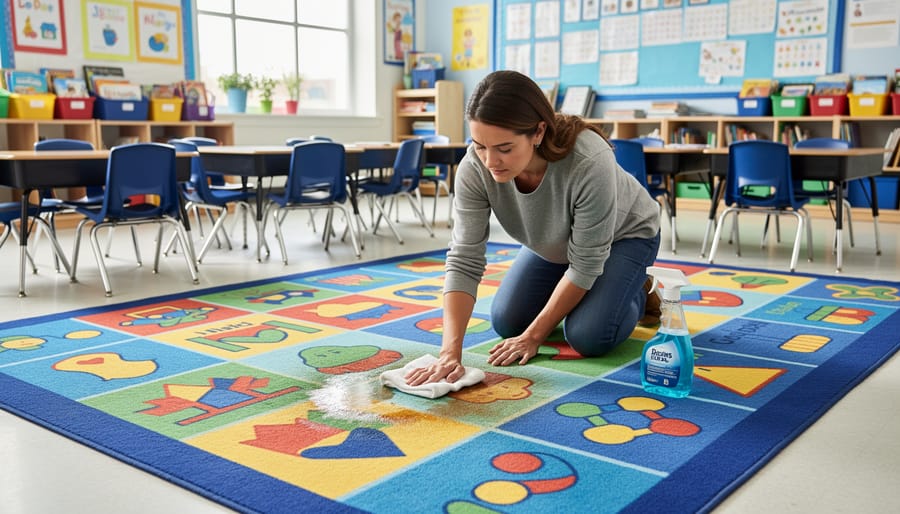
Regular maintenance keeps your classroom rug fresh and extends its life significantly. Most tasks take just minutes and can easily fit into your daily routine.
Vacuuming is your strongest defense against dirt buildup. Run a vacuum over high-traffic areas two to three times per week, and do a thorough once-over on Fridays. For smaller area rugs or carpet squares, take them outside and give them a good shake to dislodge crumbs and dust.
Spot-clean spills the moment they happen. Keep a spray bottle with water and a drop of mild dish soap nearby, along with clean cloths. Blot spills rather than rubbing them, working from the outside in to prevent spreading.
Here’s a simple maintenance checklist to keep your rug in good shape:
- Vacuum high-traffic spots twice weekly, full rug once weekly
- Shake out small rugs or carpet tiles outdoors weekly
- Spot-clean spills immediately with damp cloth and mild soap
- Rotate the rug quarterly to distribute wear evenly
- Check edges and backing monthly for fraying or damage
Rotating your rug every few months prevents one area from wearing down faster than others. This is especially helpful if students always gather in the same spot. Many teachers involve students in these tasks, turning rug care into a classroom responsibility that builds ownership and teaches life skills.
Deep Cleaning Options
Deep cleaning your classroom rug once or twice a year keeps it fresh and extends its life. The best time is during school breaks, winter holidays, spring break, or summer vacation, when the rug can dry completely without disrupting learning.
For larger rugs, renting a carpet cleaner offers professional-level results at a fraction of the cost. Many grocery and hardware stores rent machines for $30-40 per day. Choose a child-safe, low-residue cleaning solution, work in overlapping passes, and extract as much moisture as possible. Allow 24-48 hours for drying with windows open and fans running.
Professional cleaning services typically charge $0.30-0.75 per square foot and handle pickup, cleaning, and delivery. This works well for heavily soiled rugs or when time is limited.
Smaller rugs (under 4×6 feet) can often be hand-washed outdoors with a garden hose, mild detergent, and a soft brush. Scrub gently, rinse thoroughly, and hang over a railing or fence to dry.
Whatever method you choose, ensure the rug dries completely before returning it to the classroom. Moisture trapped underneath breeds mold and odors, undoing your cleaning efforts.
Addressing Common Classroom Rug Challenges
Spills are inevitable in active classrooms. For paint accidents, scrape away excess immediately with a plastic spoon before it sets. Blot, never rub, with cold water and mild dish soap, working from the edges toward the center to prevent spreading. Dried paint often requires a commercial carpet cleaner formulated for acrylic stains.
Lingering odors typically signal trapped moisture or bacteria. After cleaning, position fans to circulate air and dry the rug completely within 24 hours. Sprinkling baking soda over the surface, letting it sit overnight, then vacuuming thoroughly neutralizes most smells. If odors persist despite cleaning, the backing may have absorbed moisture, creating mold growth that requires professional treatment or replacement.
Uneven wear patterns develop where children gather most. Rotate your rug quarterly to distribute traffic across different areas. Heavy furniture creates permanent indentations, so shift placement periodically or choose low-pile options that recover better.
Replace rather than clean when backing deteriorates, edges fray beyond repair, stains resist multiple professional treatments, or odors return shortly after cleaning. A worn rug with torn backing becomes a tripping hazard and no longer provides the cushioning children need during floor activities.
Common Mistakes to Avoid When Buying a Classroom Rug
Even well-intentioned teachers sometimes make purchasing decisions they later regret, especially when trying to stretch limited classroom budgets. Understanding these common pitfalls can help you choose a rug that truly serves your students for years to come.
Many educators fall in love with a colorful design or educational theme without considering whether the rug can withstand daily use. A beautiful alphabet rug made from thin material won’t last through a school year of active learners crawling, sitting, and playing on it. Always check the pile density and backing quality before committing, even if the design seems perfect.
Size miscalculations create another frequent problem. Teachers sometimes eyeball their circle time area and order a rug that arrives too small to seat their whole class or too large to fit between furniture. Measure your space twice and compare it to the rug’s actual dimensions, not just the product description. Remember that a 5×7 rug needs at least 6×8 feet of clear floor space to sit properly.
Overlooking safety features puts children at risk unnecessarily. Rugs without proper non-slip backing can slide during active use, creating trip hazards. Check that any rug meets fire safety standards for educational settings, this isn’t optional for school environments. Allergies matter too; if you have students with sensitivities, verify that the rug is certified hypoallergenic or low-VOC.
Finally, many teachers forget to consider cleaning requirements before purchasing. That plush, deep-pile rug looks cozy but may be impossible to clean thoroughly with standard school equipment. Organizations that turn donations into value for schools often provide practical, easy-to-maintain options that busy teachers can actually keep clean. Think about your realistic cleaning capacity, a rug you can’t maintain will become a health issue rather than a learning asset.
Frequently Asked Questions
How often should a classroom rug be replaced?
Most classroom rugs last 3-5 years with proper care, but replacement depends on wear patterns and cleaning success. If the rug shows permanent staining, develops odors that deep cleaning cannot remove, or has worn spots where backing shows through, it’s time for a new one.
What’s the best way to clean paint spills from a classroom rug?
Act quickly by blotting wet paint with paper towels, then gently work from the outside in to prevent spreading. For dried paint, carefully scrape off excess with a dull knife, then use warm water and mild dish soap, blotting repeatedly until the stain lifts.
Are used classroom rugs safe for students?
Used rugs can be perfectly safe if they come from reliable sources, show no mold or persistent odors, and are thoroughly cleaned before use. Organizations accepting used rug donations often inspect items for safety and cleanliness before passing them to schools in need.
How can I find community support for classroom furnishings?
Many teachers successfully obtain rugs through parent requests at back-to-school nights, local charity organizations that support schools, online community groups, or businesses upgrading their spaces. Reach out to your school’s parent association or local furniture assistance programs that connect donors with classrooms needing supplies.
Can I wash a classroom rug in a regular washing machine?
Small rugs without rubber backing (typically under 4×6 feet) may fit in large residential or laundromat machines, but check the care label first. Larger rugs or those with non-slip backing need spot cleaning, rental carpet cleaners, or professional services to avoid damage.
Should I choose a rug with educational designs or a solid color?
Solid or simple rugs offer more flexibility across grade levels and activities, making them better long-term investments for schools with changing needs. Educational rugs with letters or numbers work beautifully in early childhood classrooms but may feel babyish to older students, so consider your teaching assignment’s stability before investing.
These questions reflect the real concerns teachers face when selecting and maintaining classroom rugs, especially those working with tight budgets. Don’t hesitate to ask for help. Many communities have generous donors who understand that every child deserves a clean, comfortable learning space, and connecting with local resources can make quality classroom furnishings accessible even when school budgets fall short.
Choosing the right classroom rug isn’t just about floor covering, it’s about creating a space where children feel safe, valued, and ready to learn. For many students, especially those experiencing housing instability or transitioning from difficult circumstances, a clean, comfortable classroom can be the most stable environment in their day. That soft rug where they gather for story time or work on projects becomes part of their sense of belonging and security.
We understand that teachers and schools often work with limited budgets, and furnishing a classroom thoughtfully can feel overwhelming. But remember, you don’t have to do it alone. Organizations throughout Toronto, including Helping With Furniture, exist specifically to support educators and families who need community furniture support. Whether you’re a teacher seeking a quality rug for your classroom or someone with gently used classroom furnishings to donate, these connections make a real difference in children’s lives.
Every child deserves a learning space that supports their growth and comfort. By selecting durable, safe, and easy-to-clean rugs, and maintaining them with care, you’re making a lasting investment in your students’ education and well-being.
If you’re an educator in need of classroom furnishings, reach out, help is available. If you have quality rugs or other school items to donate, your generosity can transform a classroom. And if you’re looking for meaningful ways to support children and families in our community, consider volunteering or contributing to organizations that bridge the gap between need and opportunity. Together, we can ensure every Toronto classroom is a welcoming place where children thrive.